
sintered bronze bushing: How It Works & When to Use It
What Is a Sintered Bronze Bushing and How Does It Work?
A sintered bronze bushing is one of those industrial components that is easy to overlook until a design depends on it. It is small, often inexpensive compared with the rest of the assembly, and rarely gets the same attention as motors, shafts, housings, or controls. Yet in many machines, the choice of bushing has a direct effect on noise, maintenance frequency, service life, and overall reliability.
That is why engineers, OEM buyers, and maintenance teams often search the same question: what is a sintered bronze bushing and how does it work? They are not usually looking for a textbook definition. They want to know whether this type of bearing really makes sense for their application, what “self-lubricating” means in practice, and where the limits are.
A sintered bronze bushing is generally used where designers want a compact plain bearing that can operate with built-in oil retention rather than depending on a continuous external lubrication system. In many suitable applications, that makes it a practical and cost-effective option. But it is not the right answer for every shaft speed, every load, or every environment.
This guide explains what a sintered bronze bushing is, how its porous structure supports self-lubricating behavior, where it is commonly used, what selection factors matter most, and when another bearing solution may be the better choice.
What Is a Sintered Bronze Bushing?
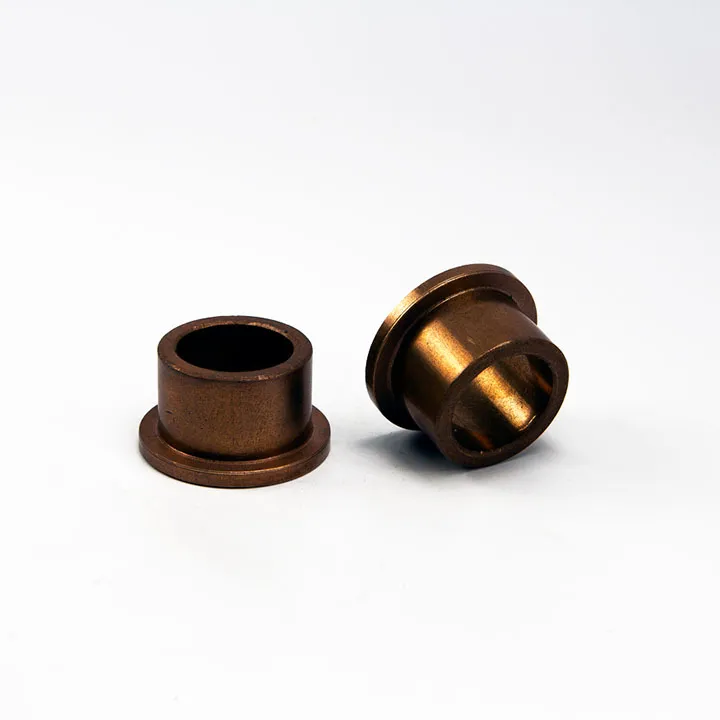
A sintered bronze bushing is a porous plain bearing made by compacting bronze powder into shape and then sintering it into a solid but still porous structure. Unlike a fully dense machined bronze bearing, a sintered bronze bushing intentionally retains interconnected porosity within the material.
That porosity is not a defect. It is the feature that makes the bushing useful.
In many designs, the porous structure is impregnated with lubricating oil. The result is a bearing that stores oil inside the body of the material itself. During operation, that stored lubricant can migrate toward the working surface under suitable conditions, helping the bushing support self-lubricating operation in many light- to moderate-duty applications.
This is why sintered bronze bushings are often described as:
- oil-impregnated bushings
- self-lubricating bronze bearings
- porous bronze bushings
- powder metallurgy bushings
These terms are related, but the core concept is the same: the bearing material itself acts as both structure and lubricant reservoir.
How Is a Sintered Bronze Bushing Made?
Sintered bronze bushings are produced by powder metallurgy rather than by conventional machining from dense bar stock.
The typical manufacturing sequence includes:
- bronze powder preparation
- compaction into a die
- sintering under controlled conditions
- calibration or sizing where needed
- oil impregnation for self-lubricating service
This process is important because it allows the bushing to be manufactured with controlled porosity and repeatable geometry. That is one reason sintered bronze bushings are often used in volume production: once the design is stable, powder metallurgy can support consistent parts efficiently.
However, the key point for the reader is not the furnace temperature or the tooling method. The key point is this:
The manufacturing route creates a porous bearing body that can retain oil.
That is what makes the bushing behave differently from a dense machined bronze sleeve.
How Does a Sintered Bronze Bushing Work?
The working principle of a sintered bronze bushing depends on its porous oil-retaining structure.
In practical terms, the bushing contains a network of microscopic pores filled with lubricating oil. During operation, the combination of motion, heat, and load helps move some of that oil toward the shaft-bearing interface. There it contributes to a lubricating film between the rotating shaft and the bushing surface.
When the system stops or cools, oil can redistribute within the porous structure. This is part of why sintered bronze bushings are often useful in intermittent-duty and moderate-load applications where continuous external lubrication is not desirable.
The most useful way to understand the working principle is through three practical effects:
1. Oil Storage Inside the Material
The porous bronze body acts as a built-in lubricant reservoir.
2. Oil Migration Toward the Bearing Surface
Under operating conditions, lubricant moves toward the contact zone where it is needed.
3. Re-distribution During Rest Periods
When the system is no longer running, oil can settle back into the pore network, helping prepare the bearing for the next cycle.
This is why a sintered bronze bushing is often attractive in systems where designers want a “fit and run” bearing concept rather than a manually lubricated plain bearing.
Why Sintered Bronze Bushings Are Considered Self-Lubricating
“Self-lubricating” is one of the most common phrases used around sintered bronze bushings, but it is also one of the most misunderstood.
It does not mean the bearing can operate forever under any condition with no wear and no limits.
It does not mean lubrication is irrelevant.
And it does not mean every environment is suitable.
What it usually means is that the bushing carries its own lubricant supply inside the porous structure, which can reduce or eliminate the need for frequent external lubrication in suitable service conditions.
That makes sintered bronze bushings especially attractive where:
- routine relubrication is difficult
- the bearing is in a small enclosed assembly
- maintenance access is limited
- the system runs at moderate load and speed
- low-maintenance design is preferred
So “self-lubricating” is best understood as a practical design advantage, not as an unlimited performance promise.
Common Applications of Sintered Bronze Bushings
Sintered bronze bushings are widely used because many machines need a simple, compact, low-maintenance plain bearing rather than a more complex rolling bearing system.
Common applications include:
Electric motors and small drives
They are often used in fan motors, small electric motors, gearmotors, and similar assemblies where quiet operation and low maintenance matter.
Automotive subassemblies
They may be used in linkages, small actuators, seat mechanisms, wiper systems, and similar moderate-duty motion points.
Industrial machinery
Conveyors, packaging equipment, light-duty handling systems, and various OEM assemblies often use sintered bronze bushings where designers want simplicity and stable supply.
Appliances and consumer equipment
Small rotating shafts in household or commercial products may use sintered bronze bushings because the self-lubricating concept fits sealed or low-maintenance designs.
Office, instrument, and precision-support equipment
In some compact motion systems, the bushing is attractive because it is quiet, simple, and easy to integrate.
This does not mean every one of these applications is automatically suitable. It means these are the kinds of environments where the design logic often favors sintered bronze.
Why Engineers Choose Sintered Bronze Bushings
A sintered bronze bushing is not usually chosen because it is the most advanced-sounding bearing technology. It is chosen because it solves a practical engineering problem efficiently.
The main reasons designers choose it often include:
Low-maintenance operation
The oil-impregnated structure can reduce the need for regular manual lubrication.
Compact design
The bushing is simple, space-efficient, and easy to integrate into many housings.
Cost-effectiveness in production
For stable, repeatable designs, powder metallurgy can be economical in production quantities.
Quiet operation
Compared with some bearing alternatives, a plain porous bronze bushing may support quieter operation in suitable conditions.
Simple assembly logic
The bearing concept is straightforward and often easier to integrate than more complex rolling-bearing arrangements in small equipment.
This is why procurement teams often like sintered bronze bushings too: they support practical, scalable product designs when the application fits.
What Makes Them Different from Machined Bronze Bushings?
This is an important distinction.
A machined bronze bushing is typically made from dense bronze stock and does not inherently contain the same oil-filled porous structure as a sintered oil-impregnated bronze bushing.
That means the two types differ in several ways:
Sintered bronze bushings
- porous structure
- oil impregnation possible
- self-lubricating behavior in suitable use
- often efficient for production volumes
- designed around built-in lubrication logic
Machined bronze bushings
- dense material
- usually depend more on external lubrication strategy
- may be preferred where custom one-off machining or very specific dimensions are needed
- may suit some low-volume or special-duty applications better
Neither is universally better. They simply serve different design priorities.
Key Selection Factors
Choosing the right sintered bronze bushing means looking beyond the phrase “self-lubricating.”
The most important factors usually include:
1. Load
The actual radial and axial load pattern matters. Moderate-duty applications are often a better fit than highly overloaded or shock-heavy systems.
2. Speed
Operating speed must be reviewed realistically. High speed alone is not the only issue; speed combined with load and heat matters most.
3. Shaft quality and fit
Surface finish, hardness, and fit between shaft and bushing all influence performance and wear behavior.
4. Temperature
Operating temperature affects lubricant behavior and overall bearing suitability. Application conditions should be reviewed carefully rather than assumed.
5. Environment
Dust, moisture, chemical exposure, and contamination all affect whether the porous self-lubricating concept remains practical.
6. Duty cycle
Intermittent, moderate, or steady service may suit sintered bronze well. Very aggressive or heavily loaded continuous service may point toward other solutions.
7. Maintenance expectations
If the goal is low-maintenance operation in a compact assembly, sintered bronze may be a very strong fit.
When a Sintered Bronze Bushing Is a Good Choice
A sintered bronze bushing is often a good choice when:
- external lubrication is inconvenient
- the application is moderate in load and speed
- the design needs a compact plain bearing
- quiet operation is desirable
- cost and manufacturability matter in production
- maintenance access is limited
- the environment is generally suitable for an oil-impregnated porous bronze bearing
This is why these bushings are so common in motors, light machinery, compact OEM products, and maintenance-sensitive assemblies.
When Another Bearing Solution May Be Better
A good technical article should also say where sintered bronze is not the obvious answer.
Alternative bearing solutions may be better when:
- loads are very high
- speed-load combination is too demanding
- shock loading is severe
- contamination is extreme
- temperature conditions are beyond what the oil-impregnated concept handles comfortably
- a different friction, precision, or material behavior is required
- external lubrication is already part of the system design
In such cases, the issue is not that sintered bronze is “bad.” It is simply that the application is asking for something else.
Common Mistakes in Selection
Mistake 1: Treating self-lubricating as unlimited
Self-lubricating does not mean maintenance-free under any load, speed, or temperature.
Mistake 2: Ignoring shaft quality
Even a good bushing will perform poorly if the shaft condition is wrong.
Mistake 3: Using the bushing in a dirty or chemically unsuitable environment
Contamination and chemistry still matter.
Mistake 4: Comparing only unit price
A cheaper bushing that fails early or creates maintenance issues is not necessarily cheaper in system terms.
Mistake 5: Assuming all bronze bushings work the same way
Dense machined bronze and porous sintered bronze do not behave identically.
FAQ
What is a sintered bronze bushing?
It is a porous bronze plain bearing made by powder metallurgy, often impregnated with oil so it can support self-lubricating operation in suitable applications.
How does a sintered bronze bushing work?
Its porous structure stores lubricating oil, which can migrate toward the shaft-bearing interface during operation and help form a lubricating film.
Why are sintered bronze bushings called self-lubricating?
Because the oil is stored inside the porous material itself, reducing the need for frequent external lubrication in many appropriate applications.
What are common uses for sintered bronze bushings?
Common uses include electric motors, automotive subassemblies, conveyors, packaging machinery, appliances, and compact OEM equipment.
Are sintered bronze bushings maintenance-free?
They are often low-maintenance, but not limitless. Performance still depends on load, speed, environment, shaft condition, and application fit.
How are sintered bronze bushings different from machined bronze bushings?
Sintered bronze bushings have a porous oil-retaining structure, while machined bronze bushings are typically dense and more dependent on external lubrication strategy.
When should I avoid sintered bronze bushings?
Avoid them when load, speed, contamination, shock, or environmental conditions make the self-lubricating porous bronze concept a poor fit.
How do I choose the right sintered bronze bushing?
Review load, speed, shaft condition, duty cycle, temperature, environment, and maintenance goals together rather than choosing by size alone.
Conclusion
A sintered bronze bushing is a practical self-lubricating plain bearing designed around a porous bronze structure that stores and releases lubricating oil during operation. That simple idea is what makes it valuable in so many industrial and OEM designs.
Its strength lies in low-maintenance operation, compact design, and cost-effective integration into moderate-duty applications where external lubrication is not ideal. Its limitations appear when the application moves into more severe load, speed, contamination, or environmental conditions than the bearing concept is meant to handle.
For engineers, buyers, and maintenance teams, the most useful way to think about sintered bronze bushings is not as a universal bearing answer, but as a highly practical solution when the application matches the design logic. If that match is right, a sintered bronze bushing can be one of the simplest and most reliable bearing choices available.