
How to choose pore size for sintered bronze filters - A Complete Guide to sintered bronze filter pore size
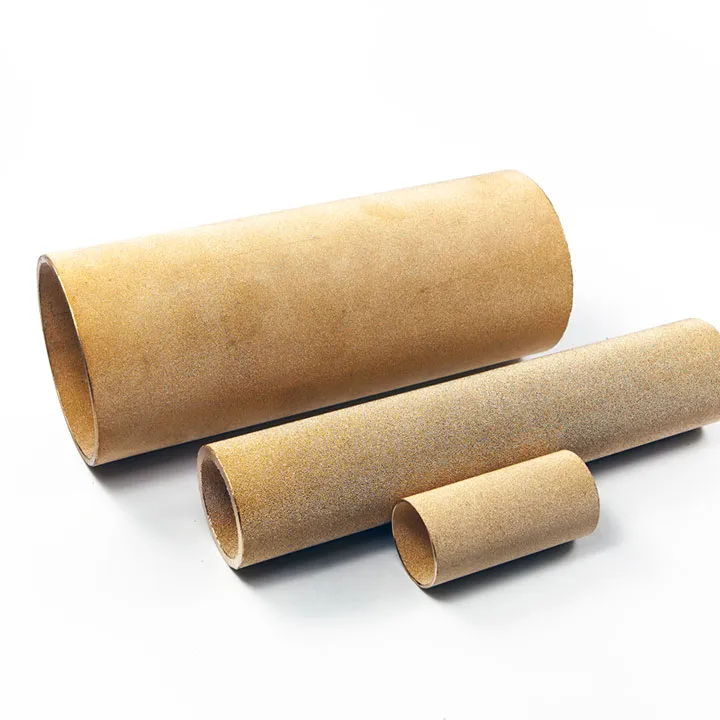
How to Choose Pore Size for Sintered Bronze Filters
Choosing the right sintered bronze filter pore size is one of the most important decisions in porous metal filter selection. Get it right, and the filter can provide stable flow, practical contamination control, and long service performance in the intended application. Get it wrong, and the result is often familiar: too much pressure drop, poor dirt retention, blocked passages, unstable flow, or a filter that simply does not match the real job.
That is why engineers, filtration system designers, and OEM buyers often ask the same question in different ways. Should the filter be 5 micron, 20 micron, 50 micron, or 100 micron? Is a lower micron rating always better? If the goal is to improve filtration, should the pore size just be made smaller? And how do you balance filtration efficiency with flow rate in a way that actually works in the field?
These questions matter because a sintered bronze filter is not selected by micron number alone. In real industrial applications, pore size must be reviewed together with the medium, contamination type, pressure drop target, available surface area, geometry, and function of the filter in the system. A bronze filter used as a pneumatic exhaust muffler has a very different selection logic from a bronze filter used as a protective vent or as a coarse filter insert in machinery.
This article explains how to choose pore size for sintered bronze filters from a practical B2B engineering perspective. Instead of treating pore size as an abstract technical value, we will focus on what it means in actual applications, how it affects performance, when a 100 micron bronze filter is the right choice, and what mistakes buyers should avoid when comparing porous bronze filter options.
Why Pore Size Matters More Than Many Buyers Expect
In theory, pore size sounds simple. Smaller pores catch smaller particles. Larger pores allow more flow. That basic idea is true, but it is incomplete.
In practice, pore size affects several important performance factors at the same time:
particle retention,
pressure drop,
flow rate,
clogging tendency,
cleanability,
and overall service behavior.
This is where many selection problems begin. A buyer may focus only on particle retention and assume a finer micron rating is automatically an upgrade. But when the pore size becomes too small for the available filter area or required flow, the result may be an excessive pressure drop or faster blockage. On the other hand, a pore size that is too open may allow unwanted particles to pass through, leaving downstream components unprotected.
That is why pore size selection is really a balancing exercise. You are not just choosing how fine the filter is. You are choosing how the filter will behave in the real system.
What “Pore Size” Means in a Sintered Bronze Filter
A sintered bronze filter is made by compacting bronze powder and then sintering it to form a rigid porous structure. The final part contains a network of interconnected pores that allow air, gas, or liquid to pass through.
When people refer to sintered bronze filter pore size, they usually mean the approximate size range of those flow passages and the related particle retention behavior. In product selection, this is often expressed through a micron rating. However, it is important to understand that pore size is not just one perfect hole repeated across the entire part. A sintered porous structure contains a distribution of pores, not a single uniform opening.
That is why industrial buyers should treat micron ratings carefully. A micron number is useful, but it is not the entire performance story. The actual behavior of a porous bronze filter also depends on:
porosity level,
wall thickness,
part geometry,
flow direction,
medium viscosity,
and contamination characteristics.
A 100 micron bronze filter, for example, should not be interpreted as a magical precision gate that blocks everything above exactly 100 microns and passes everything below it. Real filtration is more practical and more system-dependent than that.
Micron Rating Does Not Equal Simple Pass-or-Block Logic
This point deserves extra attention because it causes a lot of confusion.
Some buyers read a micron rating as if it were a guaranteed and absolute particle cutoff. In many industrial applications, that assumption is too simplistic. A porous metal filter is not always behaving like a lab sieve. Depending on the medium and the structure, it may work as a combination of flow path restriction, depth filtration, and coarse retention.
For that reason, the more useful question is not just “What micron rating is this filter?” The better question is “What kind of contamination control and flow behavior do I need in this application?”
If the filter is protecting a valve, reducing exhaust noise, or serving as a breather insert, the ideal pore size may be much more open than buyers first expect. If the goal is very fine particle retention, then the selection logic becomes stricter, and pore size must be matched more carefully to actual system demands.
The First Rule: Start with the Job of the Filter
Before choosing any micron rating, define what the filter is actually supposed to do.
This sounds obvious, but many wrong selections come from skipping this step. A porous bronze filter may serve several different roles in industrial equipment:
- coarse filtration
- protective screening
- venting
- airflow diffusion
- pneumatic muffling
- breather function
- fluid passage with contamination control
- internal component protection
Each of these roles pushes pore size selection in a different direction.
For example, if the filter is used in a pneumatic exhaust muffler, very fine pore size may not be the smartest choice. The system may benefit more from open flow, lower backpressure, and good diffusion behavior. In that case, a coarser pore structure may be more appropriate.
If the filter is protecting a sensitive passage from debris, then the pore size should be chosen based on the size of the particles that would actually damage the downstream component.
If the filter is expected to act like a fine process filter, then pore size must be selected more conservatively, and the design may need much more than just a material change.
The point is simple: choose the pore size based on the function, not on the assumption that smaller is automatically better.
The Second Rule: Understand the Contaminant You Are Trying to Control
Pore size selection makes no sense without understanding the contamination.
Ask these questions first:
What particles are present?
How large are they?
Are they hard particles, soft particles, fibers, or sticky contaminants?
Are they present occasionally or continuously?
Would a small amount of passage cause serious downstream problems, or is coarse protection enough?
This matters because a filter should be matched to the risk, not selected blindly.
If the goal is to stop large debris from entering a valve or vent line, a relatively open bronze filter may be fully adequate. If the system is sensitive to smaller particles, a finer pore structure may be required. But if the filter is too fine for the contamination load, it may clog too quickly and create a maintenance problem worse than the original contamination issue.
This is where engineering judgment matters more than the catalog number.
The Third Rule: Balance Filtration with Pressure Drop
This is the heart of the decision for many buyers.
A finer sintered bronze filter pore size often improves particle retention, but it usually increases resistance to flow. That can create a higher pressure drop. In some systems, that trade-off is acceptable. In others, it can cause immediate problems.
For example:
in compressed air systems, too much restriction may reduce performance or create undesirable backpressure;
in venting applications, too much restriction may prevent proper pressure equalization;
in fluid systems, too much resistance may reduce effective throughput or increase maintenance frequency.
This is why “better filtration” is never a complete answer on its own. The right pore size is the one that gives enough contamination control without creating an unacceptable flow penalty.
Many selection mistakes happen because buyers optimize one variable and forget the rest. It is the classic engineering trap: solve one problem so hard that you create two new ones.
Why Smaller Pore Size Is Not Always Better
This deserves its own section because it is one of the most common misconceptions.
A smaller pore size may sound more advanced, more precise, or more protective. But in real industrial selection, that is not always true. A finer pore structure may:
increase pressure drop,
reduce flow rate,
clog faster,
require more frequent maintenance,
and add unnecessary cost or design complexity.
If the real job is only coarse filtration, venting, diffusion, or pneumatic noise reduction, then using an excessively fine pore size may actually make the application worse.
A good engineer does not buy the smallest micron rating available. A good engineer buys the pore size that matches the system’s actual need.
What a 100 Micron Bronze Filter Usually Means in Practice
A product such as BRONZE FILTER 30X36X45 100MICRON gives a useful example.
In most industrial contexts, 100 micron is generally considered a relatively coarse pore size. That makes it suitable for roles such as:
coarse filtration,
venting,
breather applications,
pneumatic exhaust service,
flow diffusion,
and protection against larger particles.
A 100 micron bronze filter is often selected when the application needs a porous metal part with relatively open flow and practical contamination control rather than fine precision filtration. This is especially relevant in systems where the filter must reduce blockage risk, maintain airflow, or avoid unnecessary pressure drop.
That does not make 100 micron “basic” or “low grade.” It simply means it is designed for a different job. In many industrial systems, that is exactly the right job.
How Application Type Changes the Best Pore Size
Pneumatic Exhaust and Mufflers
In pneumatic exhaust service, a sintered bronze filter often acts as both a porous flow diffuser and a coarse protective element. Here, a coarser pore size can be an advantage because it supports better airflow and lower backpressure. Overly fine pore structures may reduce exhaust performance and increase clogging.
Breathers and Vents
For breathers and vents, the main goal is often to allow air exchange while limiting contaminant entry. The correct pore size depends on the contamination level and how sensitive the protected space is. In many cases, a medium-to-coarse pore size works well because open flow is important.
Protective Inserts for Valves or Instruments
If the purpose is to block debris from entering a sensitive passage, the pore size should be chosen according to the smallest particle likely to create harmful blockage or wear. This role may justify a finer structure than a muffler application, but the final choice still depends on flow and service conditions.
Coarse Fluid Filtration
Where bronze filters are used for coarse fluid-related functions, the medium viscosity and contaminant characteristics become more important. A pore size that works well in air may behave very differently in a more viscous fluid system.
This is why application context must always come first.
Common Buyer Mistakes When Choosing Bronze Filter Micron Ratings
Mistake 1: Choosing based on micron number only
A filter is not just a micron rating. Geometry, thickness, medium, flow, and contamination load all matter.
Mistake 2: Assuming lower micron means better quality
A finer rating is not automatically more advanced. It may simply be less suitable for the intended application.
Mistake 3: Ignoring pressure drop
A filter that blocks particles but disrupts system flow is not a successful selection.
Mistake 4: Using fine filtration logic for a venting or muffling application
Many bronze filters are chosen for airflow function, not for ultra-fine particle removal. Selection logic must match the actual role.
Mistake 5: Not considering maintenance
If the contamination load is high, a very fine pore size may create frequent clogging and service problems.
Mistake 6: Comparing different filter types as if micron ratings are identical
A micron number on a porous bronze filter should not be treated as directly equivalent to every other filter technology. Structure and behavior differ.
A Practical Selection Process for Sintered Bronze Filter Pore Size
If you want a reliable way to select pore size, work through the following logic.
1. Define the medium
Is the system handling air, gas, oil mist, water-related media, or another fluid? The medium affects flow behavior and clogging tendency.
2. Define the filter function
Is the filter for protection, venting, muffling, diffusion, or actual particle retention? This changes the target pore size range.
3. Identify the contamination
What particle size or debris type must be controlled? What downstream problem are you preventing?
4. Review acceptable pressure drop
How much resistance can the system tolerate? This often eliminates overly fine pore choices.
5. Consider service life and maintenance
Will the filter be cleaned, replaced, or expected to operate for a long interval without attention?
6. Review geometry and available area
A larger surface area may allow a finer pore size while maintaining acceptable flow. A compact filter with limited area may require a more open structure.
7. Match the pore size to the real application, not to catalog anxiety
Many over-specified filters come from fear rather than engineering. “Let’s choose finer just in case” is often the sentence that starts the problem.
When a 100 Micron Bronze Filter Is a Good Choice
A 100 micron sintered bronze filter is often a good choice when:
the application is focused on coarse filtration,
the system requires relatively open flow,
pressure drop must be controlled,
the filter serves a venting or diffusion role,
or the main goal is protection from larger particles rather than fine precision separation.
This makes a product like BRONZE FILTER 30X36X45 100MICRON a practical option for many industrial uses such as pneumatic exhaust, venting, breathers, and general equipment protection points.
For buyers, that means the product should not be judged by whether it is “fine enough” in an abstract sense. It should be judged by whether it matches the actual system function.
When a 100 Micron Bronze Filter May Not Be the Right Choice
This is just as important.
A 100 micron bronze filter may not be the best choice when:
the system requires fine particle retention,
the downstream component is sensitive to smaller contaminants,
the contamination load demands tighter control,
or the application expectation is closer to fine process filtration than coarse protective filtration.
In those cases, the selection may need a finer porous structure, a different filter geometry, or even a different filter material or technology altogether.
Good selection is not about defending one micron rating. It is about matching the system honestly.
Bronze Filter Pore Size vs Total Filter Design
Pore size is important, but it is only one part of the filter design.
The final performance of a sintered bronze filter is influenced by:
pore structure,
overall porosity,
part thickness,
filter area,
shape,
installation method,
medium,
and flow conditions.
This means two bronze filters with different dimensions but the same nominal micron rating may not perform the same way in the same system. That is why experienced buyers look at the whole filter, not just the pore size line in the product description.
FAQ
What is the best pore size for a sintered bronze filter?
There is no single best pore size for all applications. The right choice depends on the medium, contamination size, filter function, pressure drop target, and maintenance expectations.
Is a lower micron rating always better?
No. A lower micron rating may improve particle retention, but it can also increase pressure drop and clogging risk. The best pore size is the one that matches the real application.
Is a 100 micron bronze filter considered coarse or fine?
In most industrial applications, 100 micron is generally considered a coarse pore size. It is often suitable for venting, diffusion, pneumatic exhaust, and protection against larger particles.
How do I choose between flow rate and filtration efficiency?
You usually need to balance both. If you push too far toward finer filtration, flow may suffer. If you choose too open a structure, contaminant control may be insufficient. Selection should reflect the actual system priority.
Does pore size alone determine filter performance?
No. Performance also depends on geometry, wall thickness, porosity, medium, contamination type, and operating conditions.
Is a 100 micron bronze filter suitable for pneumatic applications?
Yes, in many cases it is a practical choice for pneumatic exhaust, muffling, venting, and coarse protection where open flow is important.
Can I choose pore size just by comparing micron numbers from different filter types?
Not safely. Different filter materials and structures behave differently, so micron ratings should be compared carefully and in application context.
When should I avoid choosing a 100 micron bronze filter?
Avoid it when the application needs fine particle retention or tighter contaminant control than a coarse porous structure can provide.
Conclusion
Choosing the right sintered bronze filter pore size is not about selecting the finest micron rating available. It is about matching the filter to the real job. The correct pore size depends on what the filter must do, what contamination must be controlled, how much pressure drop the system can tolerate, and how the part will be maintained in actual service.
For many industrial applications, especially those involving venting, breathers, pneumatic exhaust, airflow diffusion, and coarse equipment protection, a 100 micron bronze filter can be a very practical and effective choice. It supports open flow, reduces unnecessary restriction, and provides useful contamination control for the right type of system.
For engineers, designers, and OEM buyers, the best selection approach is simple: start with the function, the medium, and the real operating conditions. Then choose the pore size that solves that problem without over-specifying the filter.
If your application requires a rigid porous bronze insert for coarse filtration, airflow control, or protective venting, BRONZE FILTER 30X36X45 100MICRON can be a suitable option. For dimensional reference and product fit, review the related product page here: /products/bronze-filter/porous-metal-filter-bronze-filter-30x36x45-100micron.html