
The Future of Filtration: How Powder Metallurgy is Shaping Industrial Processes
The Future of Filtration: How Powder Metallurgy Is Shaping Industrial Processes
Introduction
Filtration sits at the heart of modern industry. Whether ensuring ultrapure water for pharmaceuticals, protecting jet engines in aerospace, or enabling hydrogen-powered fuel cells, filters safeguard both equipment reliability and product quality. Yet conventional filter media—woven meshes, disposable cartridges, and brittle ceramics—often struggle to meet the demands of today’s high-performance, sustainable industries.
Enter powder metallurgy (PM): a century-old technology reinvented for modern challenges. Through PM, manufacturers create sintered filters that are precisely engineered, highly durable, and reusable—unlocking performance levels beyond conventional filtration.
This article explores how powder metallurgy is shaping the future of industrial filtration, from advanced engineering capabilities to new applications in energy, sustainability, and high-tech manufacturing.
1. Precision Engineering via Powder Metallurgy
The PM Process: Compacting & Sintering
Powder metallurgy filters are produced by:
-
Powder Selection: Stainless steel, bronze, titanium, or polymer powders (e.g., polyethylene).
-
Compaction: Powders pressed into shape under high pressure.
-
Sintering: Heating just below melting point bonds particles, forming a rigid porous structure.
The result: a filter with controlled porosity and mechanical strength.
Engineering Advantages of PM Filters
-
Pore Size Control: From 0.5 µm (fine gas filtration) to 150 µm (coarse liquid filtration), with the ability to produce graded porosity for depth filtration.
-
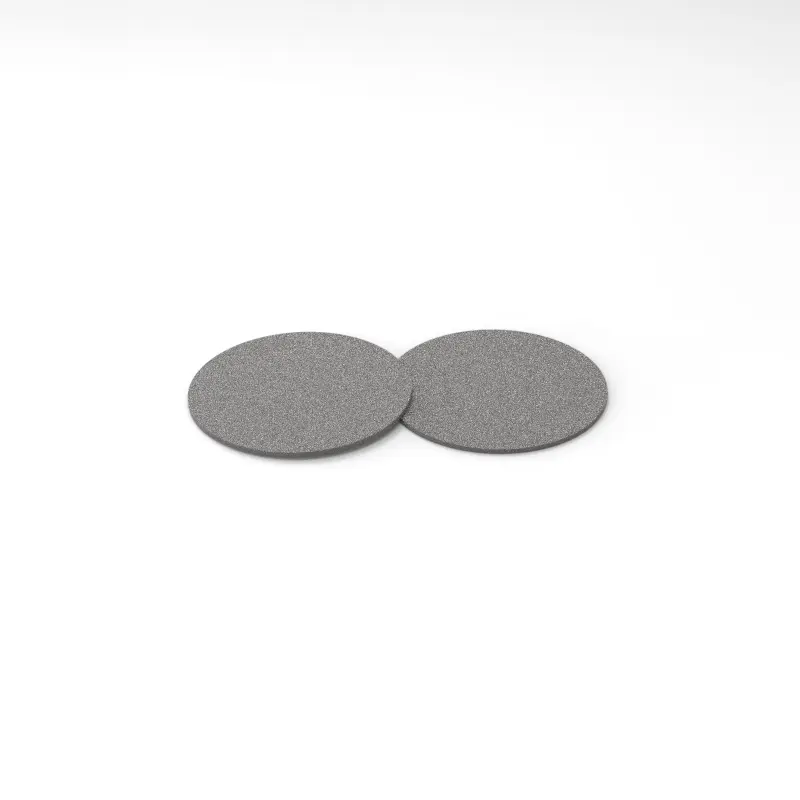
Complex Geometries: Tubes, discs, cones, rings, and custom forms, enabling integration into any industrial system.
-
Hybrid Materials: Multi-layer filters combining materials (e.g., duplex stainless steels for dirt capacity + corrosion resistance).
This engineering flexibility means filters can be tailored precisely to process requirements, unlike traditional mesh or cartridge designs.
2. Advantages Over Conventional Filters
| Feature | Sintered PM Filters | Traditional Filters |
|---|---|---|
| Temperature Resistance | Up to 900 °C (SS316L) | ≤ 250 °C (polymer); ceramics brittle under shock |
| Reusability | 100+ cleaning cycles (backflush, thermal, ultrasonic, CIP) | Mostly disposable |
| Mechanical Strength | High (150+ MPa for stainless steel) | Mesh tears, ceramics crack |
| Chemical Compatibility | Excellent (acids, alkalis, solvents) | Limited by base material |
| Porosity Control | Precisely engineered (0.5–150 µm) | Inconsistent or limited options |
These advantages explain why industries are replacing short-life disposable filters with durable, reusable sintered filters to cut costs and improve process reliability.
3. Emerging Industrial Applications
Sustainable Processes
-
Carbon Capture: Sintered stainless steel filters withstand hot, corrosive flue gases while capturing fine particulates.
-
Water Reclamation: Sintered PE filters (5 µm) remove microplastics and fine solids in wastewater treatment.
High-Tech Industries
-
Semiconductors: SS316L filters (0.5 µm) guarantee ultrapure gas supply, critical for chip manufacturing.
-
Additive Manufacturing: PM filters clean and recycle powder feedstock for 3D printing, improving consistency.
Energy & Power
-
Hydrogen Economy: Sintered filters remove CO₂ and moisture from hydrogen fuel streams at high pressures.
-
Nuclear Venting: SS904L filters provide containment of radioactive particulates during emergency venting.
Each application demonstrates how PM filters align with industry trends: sustainability, energy efficiency, and reliability.
4. Innovations in PM Filter Technology
Powder metallurgy is not standing still—ongoing research is pushing boundaries:
-
Functionally Graded Materials: Pore size transitions within one filter, providing coarse-to-fine depth filtration in a single element.
-
Smart Filters: Embedded sensors to monitor pressure drop, clogging, and flow rates for predictive maintenance.
-
Green Manufacturing: Using recycled metal powders, cutting CO₂ emissions in production by up to 50%.
-
Nanostructured Filters: Next-gen sintering enables sub-0.1 µm pores, paving the way for viral and nanoparticle filtration.
5. Challenges and Solutions
While PM filters offer unmatched performance, certain challenges remain:
1. Clogging of Fine Pores
-
Challenge: Small pores (≤1 µm) clog quickly.
-
Solution: Advanced cleaning protocols (ultrasonic + chemical CIP) restore permeability without damage.
2. Higher Upfront Cost
-
Challenge: Stainless steel filters cost more than polymer cartridges.
-
Solution: Lower TCO—a 10-year lifespan reduces replacement and waste costs.
3. Material Limits
-
Challenge: PE filters restricted to ≤80 °C and ≤5 bar.
-
Solution: Choose stainless steel for high-temp and corrosive environments.
By addressing these issues, PM filters provide reliable, long-term performance across industries.
6. The Road Ahead: Future of PM Filtration
Nanostructured Materials
PM advances will achieve sub-micron pores (<0.1 µm) for virus and nanoparticle removal, opening doors in biotech and healthcare.
Biocompatible Materials
Porous titanium and medical-grade stainless steels for implantable devices, drug delivery, and dialysis filtration.
AI-Optimized Designs
Machine learning models predicting clogging patterns and flow dynamics, allowing engineers to design longer-lasting, more efficient filters.
Integration with Industry 4.0
Smart PM filters with IoT-enabled monitoring will become part of predictive maintenance ecosystems, reducing downtime in critical industries.
7. Why Industries Are Adopting PM Filters
-
Regulatory Compliance: Meet ISO 8573 (air purity), FDA (pharma), ASME BPE (biotech).
-
Circular Economy: Reusable filters reduce waste compared to single-use cartridges.
-
Sustainability: Lower energy consumption and reduced carbon footprint with recycled powders.
-
Reliability: Withstand harsh conditions, ensuring process continuity in sectors from molten metal casting to nuclear safety.
DALON’s Role in Powder Metallurgy Filtration
As a global leader in sintered filter technology, DALON delivers solutions across 20+ industries.
What We Offer
-
Custom Solutions: Tailored pore sizes (0.5–150 µm), geometries (tubes, cones, bushings, discs), and materials (PE, bronze, SS304/316L).
-
Validation Support: Bubble-point testing (ASTM F316), flow rate charts, and material certifications.
-
Global Supply Network: Reliable filtration products for pharma, food & beverage, aerospace, energy, and more.
By combining engineering precision with application expertise, DALON ensures that clients receive cost-effective, durable, and compliant filter solutions.
Conclusion
Powder metallurgy is not simply improving filtration—it is reshaping the way industries approach separation, purification, and sustainability. With engineered porosity, superior durability, and environmental benefits, PM sintered filters are set to become the standard in modern industrial filtration.
From semiconductor fabs requiring ultrapure gases to chemical plants demanding corrosion-resistant filters and sustainable industries reclaiming water and capturing carbon, the versatility of PM is driving innovation across the globe.
At DALON, we are proud to lead this transformation, offering custom-engineered sintered filters that enable smarter, greener, and more efficient industrial processes.
👉 Explore DALON Sintered Filters for Your Industry
FAQ
1. What makes powder metallurgy filters better than conventional filters?
They offer higher strength, wider temperature tolerance, chemical compatibility, and reusability compared to disposable mesh, polymer, or ceramic filters.
2. What pore size range is available for sintered filters?
-
Standard: 0.5–150 µm
-
Custom: Graded porosity or multilayer structures for specialized needs.
3. Are sintered filters sustainable?
Yes. They can be reused for 100+ cleaning cycles and manufactured with recycled metal powders, reducing waste and carbon footprint.
4. Which industries benefit most from PM filters?
-
Pharmaceuticals & Biotech: Sterile filtration
-
Aerospace & Automotive: Engine protection
-
Energy & Power: Hydrogen, nuclear, and carbon capture
-
Water & Environment: Microplastics and wastewater treatment
5. How long do sintered stainless steel filters last?
Often 10+ years with proper maintenance, significantly reducing TCO compared to disposable alternatives.
6. Can DALON customize sintered filters?
Absolutely. DALON offers tailored pore sizes, geometries, and materials, plus validation support such as bubble point testing and flow certification.